Cross-Platform Synchronization in Progressive Roulette Jackpot Systems
Written by Viktor Walter · Jun 30, 2026

Cross-Platform Synchronization in Progressive Roulette Jackpot Systems
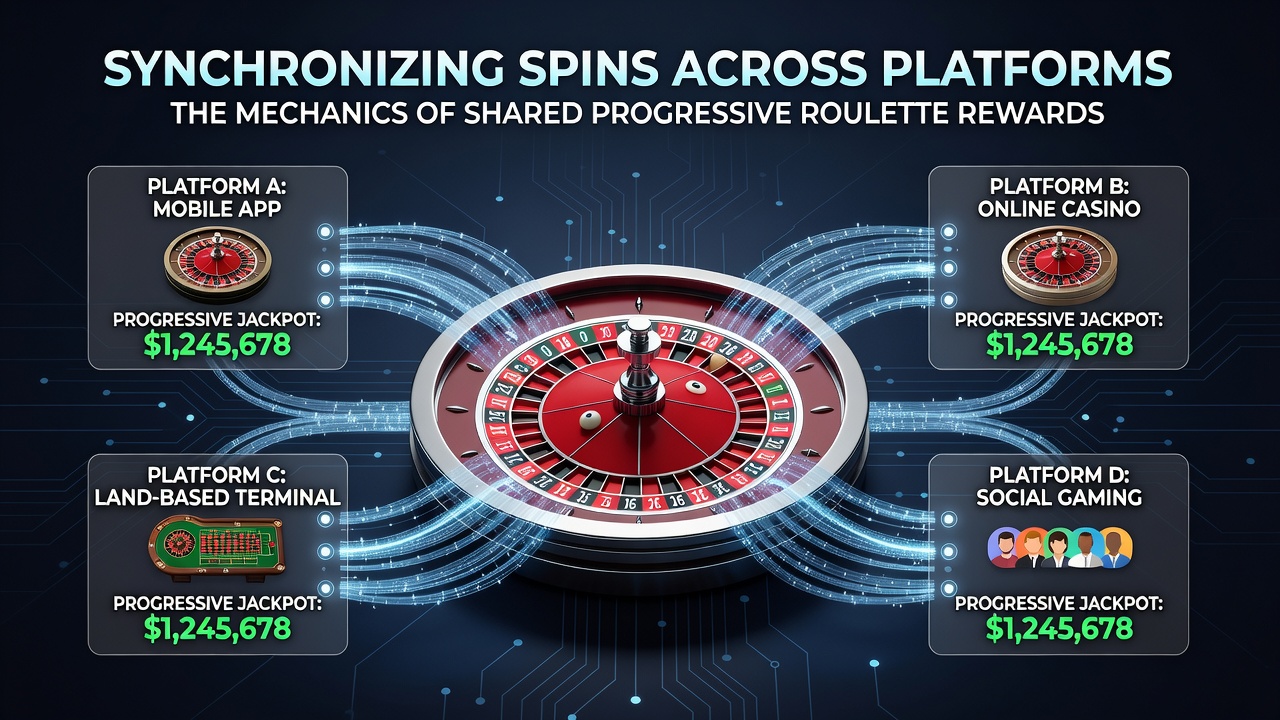
Progressive roulette rewards that span multiple platforms rely on centralized jackpot pools where contributions from bets placed on different sites feed into shared prize structures, and synchronization occurs through dedicated server networks that update totals in real time. Operators connect their game servers to a master controller that aggregates wagers, recalculates the growing jackpot amount, and pushes the updated figure back to each participating platform within milliseconds.
Core Technical Architecture
The process begins when a player places a qualifying bet on any connected roulette variant, after which a small percentage of that wager routes automatically to the shared pool via secure API calls between the operator's system and the jackpot management server. Data packets containing bet size, timestamp, and player identifier travel through encrypted channels, while the central system validates each contribution before adding it to the running total.
Multiple platforms therefore display identical jackpot amounts because they all pull live figures from the same source rather than maintaining separate local counters. This setup prevents discrepancies that could arise if individual sites calculated their own progressive values independently.
Real-Time Data Exchange Protocols
Developers implement standardized communication protocols that allow different software providers to interface with the jackpot controller without custom integrations for every new partner. These protocols handle high-volume transaction streams, especially during peak hours when thousands of spins occur simultaneously across desktop, mobile, and live dealer environments.
June 2026 saw several operators deploy enhanced timestamp synchronization modules that reduced latency further by incorporating edge computing nodes closer to regional data centers, ensuring jackpot displays remain consistent even when network conditions fluctuate.
Contribution and Distribution Mechanics
Each qualifying bet contributes a fixed percentage to the pool, typically ranging from 1 to 5 percent depending on the game configuration chosen by the operator network. The system tracks these contributions separately from base game returns, and the accumulating total becomes visible to all players on linked platforms.
When a jackpot trigger condition activates, usually a specific wheel outcome such as landing on a designated number or bonus segment, the system awards the current pool amount to the winning player. Remaining funds then seed a new starting total, and the cycle restarts across every connected site.
Observers note that this model requires robust fraud detection layers because the shared nature of the pool increases incentive for coordinated manipulation attempts across multiple accounts or platforms.
Regulatory Oversight and Compliance Standards
Regulatory bodies in various jurisdictions require independent testing of synchronization software to confirm that jackpot amounts update accurately and that payout mechanisms function without bias. The Nevada Gaming Control Board maintains guidelines for multi-site progressive systems that emphasize audit trails and real-time monitoring capabilities.
Industry groups such as the American Gaming Association have published reports detailing best practices for cross-platform jackpot integrity, while academic research from institutions like the University of Nevada has examined statistical fairness in pooled reward structures.
Observed Implementation Patterns
Operators often segment progressive roulette pools by region or player tier to manage regulatory differences and currency variations, yet all segments still draw from the same underlying synchronization engine. This layered approach allows localized marketing while preserving the core mechanic that drives larger prize accumulation.
Data from international gaming reports indicates steady growth in the number of platforms joining shared progressive networks, particularly after software updates in early 2026 improved compatibility across legacy and modern game engines.
Conclusion
The mechanics of synchronizing spins for shared progressive roulette rewards center on centralized servers, standardized data protocols, and percentage-based contribution systems that maintain consistent jackpot values across diverse platforms. These technical elements work together to deliver unified prize pools while meeting compliance requirements from multiple regulatory regions.