Decoding How Sign-Up Incentives Shape Progressive Reward Pools in Digital Wheel Play
Written by Gisela Richter · Aug 1, 2026
Decoding How Sign-Up Incentives Shape Progressive Reward Pools in Digital Wheel Play
Sign-Up Offers and Their Entry Point Into Reward Systems
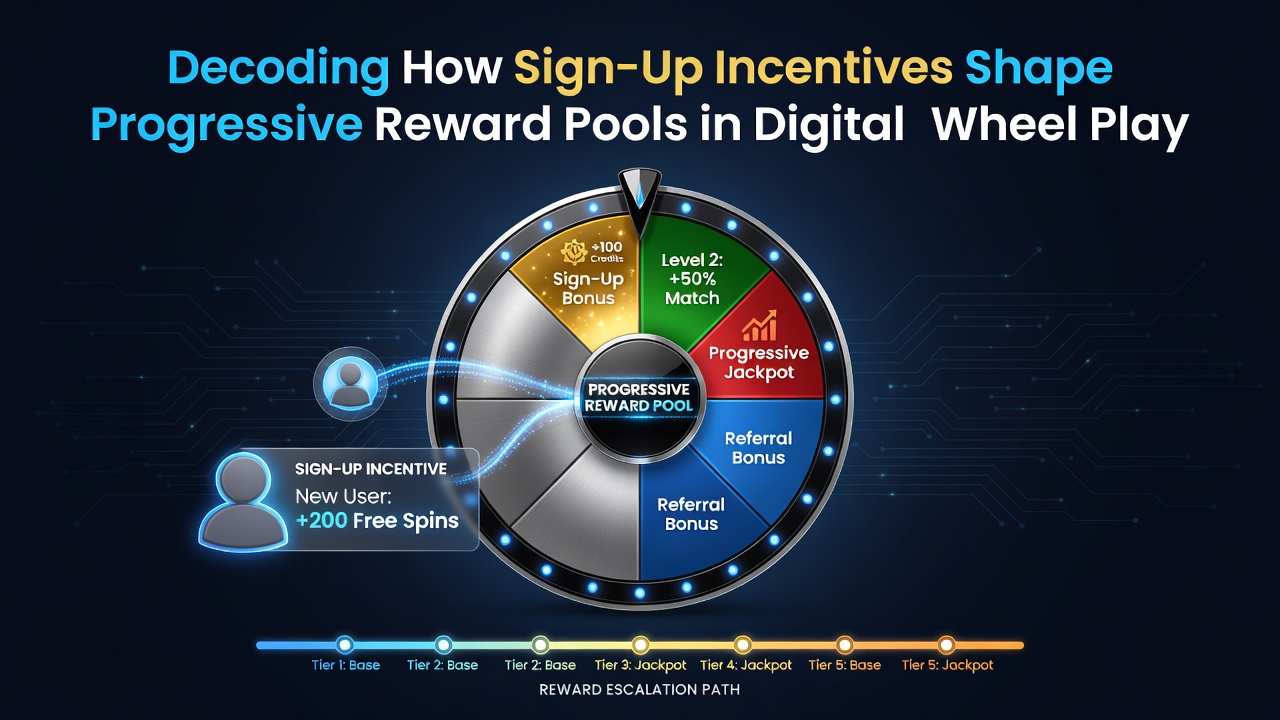
Digital wheel platforms incorporate sign-up incentives as initial funding mechanisms that feed into progressive reward pools, where operators allocate portions of bonus amounts to seed or boost jackpots that grow with each qualifying spin. Data from industry reports indicate these incentives often represent 50 to 200 percent of a player's first deposit, with 10 to 30 percent of that value directed toward pool contributions depending on the site's structure. Researchers at institutions such as the National Institute on Alcohol Abuse and Alcoholism have examined similar reward dynamics in gaming environments, noting how entry-level promotions accelerate pool growth rates during peak registration periods.
Operators calculate pool contributions through fixed percentages applied to bonus wagers, and this process creates a direct link between new player activity and jackpot expansion. In practice, a player who claims a matched deposit bonus triggers an automated transfer where part of the credited amount supports the progressive meter, while the remainder covers standard play credits. Those who study platform mechanics observe that this allocation method maintains pool momentum even when base game stakes remain modest.
Mechanics of Progressive Pool Accumulation
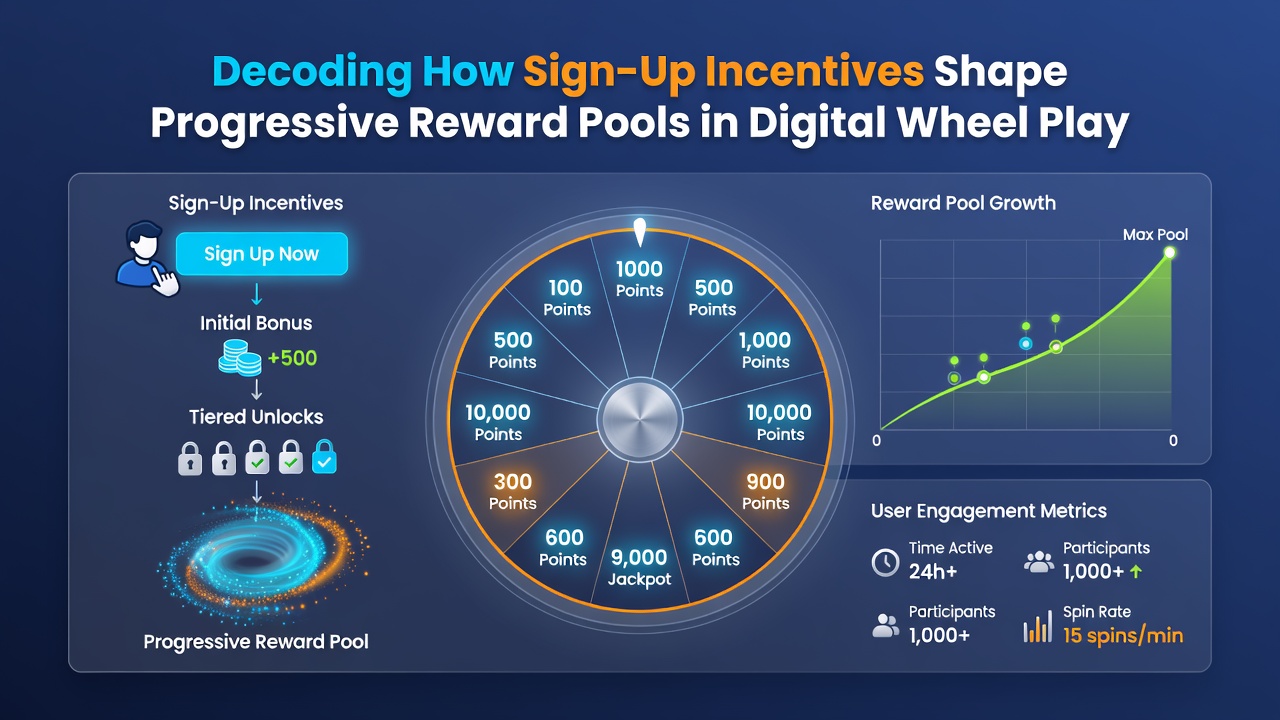
Progressive reward pools in digital wheel environments build through layered contributions that include sign-up incentives, ongoing player wagers, and occasional operator top-ups. Each bonus round completed under wagering requirements adds incremental value to the pool, with algorithms tracking eligible bets in real time. Figures from the Australian Institute of Health and Welfare reveal that incentive-driven contributions can account for up to 25 percent of monthly pool increases in comparable online gaming segments during high-traffic quarters.
Multiple pools often run simultaneously, with some tied exclusively to new registrations and others open to all participants. Sign-up offers frequently carry playthrough conditions that extend the period during which bonus funds remain active in the system, thereby sustaining contributions over several sessions. Observers note that longer requirement periods correlate with steadier pool growth curves, as funds circulate before conversion to withdrawable cash.
Regulatory Context and August 2026 Developments
By August 2026, updated transparency rules in several jurisdictions required operators to disclose exact percentages of sign-up incentives allocated to progressive pools. These measures, implemented across parts of North America and Europe, aimed to clarify how bonus structures influence jackpot sizes visible to players. Compliance reports from bodies such as the Alcohol and Gaming Commission of Ontario show that platforms adjusted their allocation formulas in response, often increasing the incentive-to-pool ratio to maintain competitive jackpot displays.
Platform audits conducted around that period demonstrated measurable differences in pool velocity between sites with aggressive sign-up campaigns and those relying on organic contributions alone. The data indicate that incentive-heavy models produced faster initial pool expansion, although long-term stability depended more on sustained player volume than on one-time bonuses.
Player Behavior Patterns and Pool Dynamics
Players engaging with sign-up incentives tend to generate higher volumes of qualifying spins in the early stages of account activity, which directly accelerates contributions to progressive pools. Studies from academic sources including the University of Sydney's Gambling Research Unit document elevated bet frequencies during the first 48 hours after bonus activation, with many participants completing required wagers within structured timeframes. This concentrated activity creates short-term spikes in pool meters that operators then market to attract additional registrants.
Retention rates influence how long these contributions continue, since players who remain active beyond the bonus period add further value through standard play. Those monitoring platform trends report that sites offering tiered incentives, where larger deposits unlock higher pool percentages, see corresponding jumps in average contribution per new account. The pattern holds across different wheel variants, from single-zero to multi-wheel configurations, as long as the underlying contribution rules stay consistent.
Technical Implementation and Tracking Systems
Backend systems on digital wheel platforms use automated scripts to route portions of sign-up bonuses into designated progressive ledgers, with each transaction logged against player identifiers and bonus codes. Real-time dashboards display current pool values alongside projected growth based on incoming registrations. Software providers integrate these functions through APIs that connect bonus engines directly to jackpot controllers, ensuring seamless updates without manual intervention.
Security protocols verify that contributions match stated percentages, and independent testing agencies conduct periodic reviews to confirm accuracy. Data logs from these reviews indicate minimal variance between promised and actual allocations when systems operate under standard conditions. The infrastructure supports multi-currency environments, where conversions occur at fixed rates to maintain pool integrity across regions.
Conclusion
Sign-up incentives function as structured inputs that operators channel into progressive reward pools through defined percentage allocations and wagering mechanics. August 2026 regulatory updates highlighted these pathways by mandating clearer disclosures, allowing observers to track incentive-driven growth more precisely. Research from varied sources confirms that player activity patterns during bonus periods produce measurable effects on pool expansion rates, while technical systems ensure consistent contribution tracking. The interplay between initial offers and ongoing pool development remains a core operational feature across digital wheel platforms.