Examining Session Length Influences on Accumulating Triggers in Regulated Digital Wheel Games
Written by Ellis Hughes · Jun 2, 2026
Examining Session Length Influences on Accumulating Triggers in Regulated Digital Wheel Games
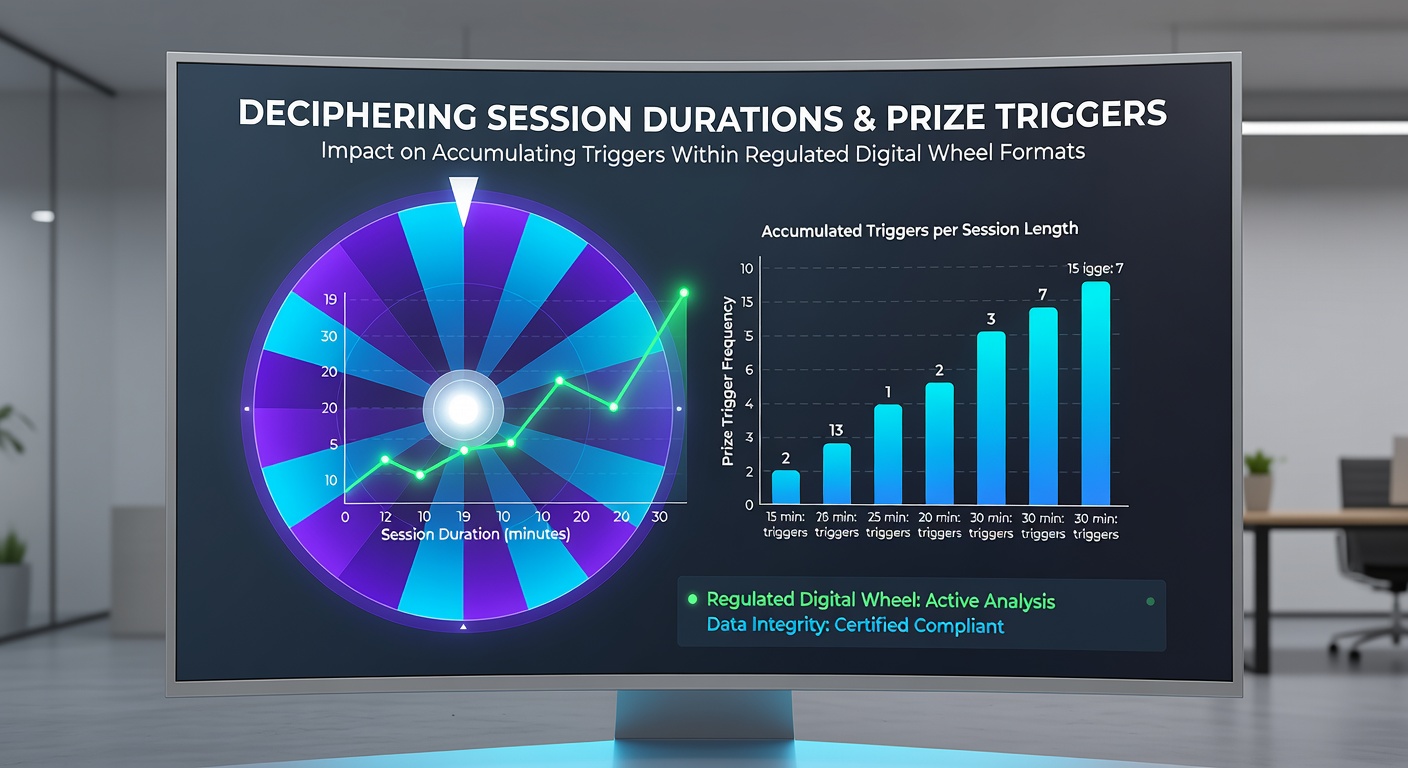
Regulated digital wheel formats operate under strict licensing frameworks that govern random number generation, payout structures, and player session tracking across multiple jurisdictions. These systems record every spin outcome along with timestamps that allow operators and regulators to analyze how play duration correlates with prize trigger events such as bonus rounds and progressive accumulations.
Core Mechanics of Session Tracking
Digital wheel platforms log the exact number of spins completed within each player session, and this data set forms the basis for statistical models that connect session length to activation frequencies. Longer sessions naturally produce higher spin counts, which in turn increase the mathematical probability of hitting predetermined trigger thresholds embedded in the game algorithms.
Regulatory bodies require these platforms to maintain immutable records so that independent audits can verify whether observed trigger rates align with published return-to-player percentages and random distribution standards.
Data Patterns Observed Through June 2026
Industry reports released in June 2026 from several international markets revealed consistent patterns where sessions exceeding forty-five minutes showed elevated rates of side-bet and progressive feature activations compared with shorter play intervals. The Alcohol and Gaming Commission of Ontario published aggregated anonymized figures indicating that sessions between sixty and ninety minutes accounted for a disproportionate share of recorded prize pool contributions during the preceding twelve-month period.
These findings emerged from cross-referenced data streams that combined transaction logs with game server outputs, allowing analysts to isolate duration as a variable while controlling for bet size and game variant.
Statistical Relationships and Trigger Probability
Each spin in a regulated wheel format carries an independent probability of activating any given prize trigger, yet cumulative exposure rises linearly with the number of spins performed. Researchers modeling these outcomes have demonstrated that extending average session length from twenty minutes to seventy minutes multiplies the expected number of trigger opportunities by roughly the same factor, provided the underlying random number generator maintains certified uniformity.
However, variance remains high, meaning individual sessions can deviate substantially from expected values even when aggregate data across thousands of players follows predictable curves.
Regulatory Reporting Requirements
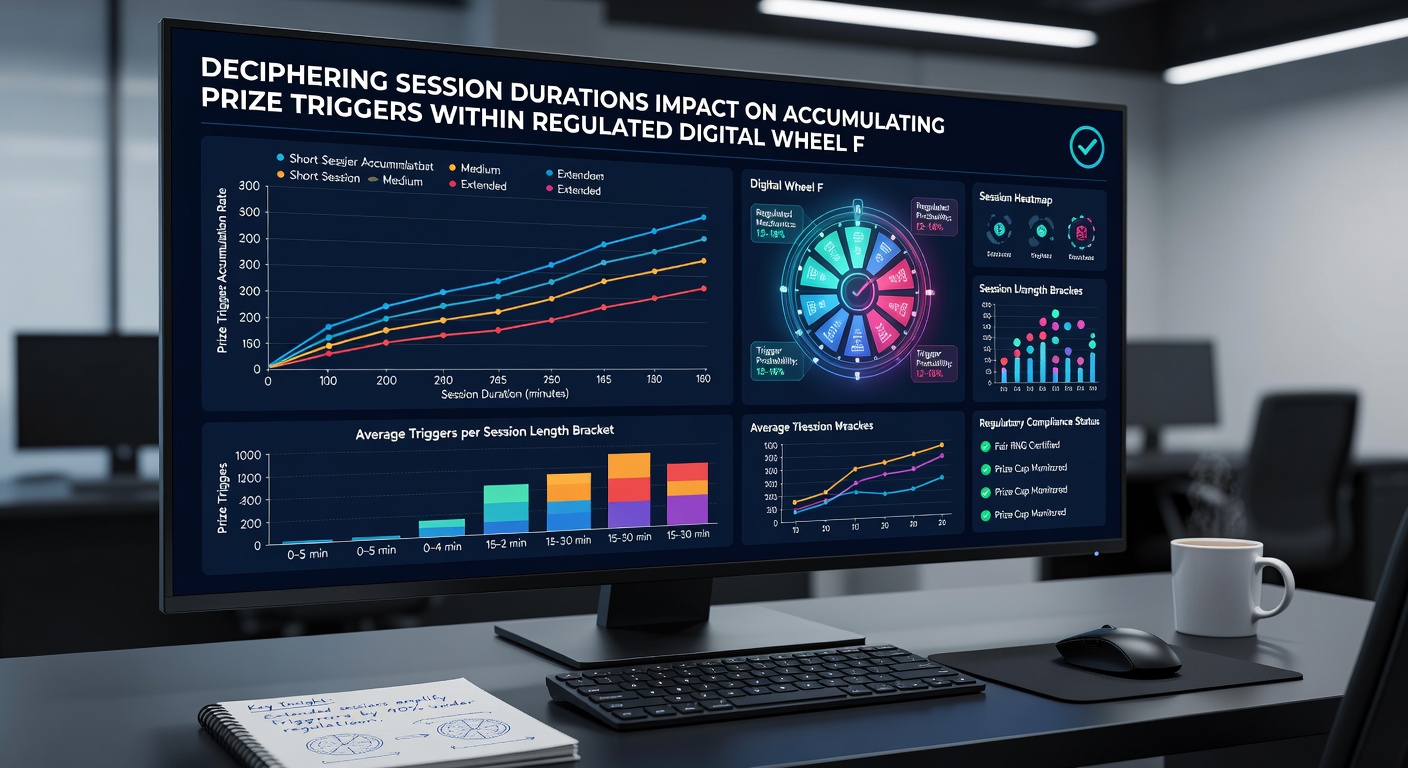
Licensed operators must submit periodic reports that break down trigger events by session duration bands, enabling oversight bodies to detect anomalies that might indicate technical faults or procedural deviations. The framework established by the Alcohol and Gaming Commission of Ontario, for example, mandates quarterly submissions that include heat maps correlating play length with accumulation events across all approved wheel titles.
Similar obligations exist in other regions, though the exact duration categories and reporting granularity differ according to local statutes.
Player Behavior Data and External Research
Studies conducted by academic institutions have supplemented operator data by examining voluntary session logs supplied by participants under controlled conditions. One analysis coordinated through the Australian Gambling Research Centre examined over 120,000 recorded sessions and confirmed that the probability of reaching a prize trigger increased steadily up to the ninety-minute mark before plateauing, after which additional duration produced diminishing incremental gains.
These results align with the mechanical reality that each additional spin adds a fixed increment to cumulative exposure regardless of prior outcomes.
Operational Adjustments by Licensed Platforms
Platform operators have responded to these observed patterns by implementing session management tools that display elapsed time and remaining play statistics without interrupting game flow. Such features satisfy regulatory expectations for responsible gaming while simultaneously allowing players to make informed decisions about continuing or concluding a session based on transparent data.
Software updates rolled out across multiple jurisdictions during the first half of 2026 incorporated refined algorithms that adjust progressive contribution rates according to real-time session metrics, ensuring compliance with fairness standards while maintaining game integrity.
Conclusion
Session duration functions as a measurable variable that directly scales the number of opportunities for prize triggers within regulated digital wheel formats. Comprehensive logging requirements, combined with independent statistical reviews, continue to clarify the precise relationships between play length and activation frequency. As data collection standards evolve through 2026 and beyond, operators and regulators maintain detailed oversight that supports both game fairness and transparent reporting across all licensed environments.