Networked Live Dealer Tables Drive Accumulating Rewards via Player Behavior in Licensed Markets
Written by Viktor Walter · Aug 25, 2026

Networked Live Dealer Tables Drive Accumulating Rewards via Player Behavior in Licensed Markets
Networked live tables connect multiple gaming venues through central systems that track betting sequences across sessions and locations, allowing reward pools to grow based on collective player activity rather than isolated spins. Licensed operators in regulated jurisdictions deploy these platforms to link roulette and other table games into shared networks where patterns such as repeated bet types, session duration, and wager progression directly influence how progressive elements accumulate and distribute.
Core Mechanics of Networked Table Integration
Central servers aggregate real-time data from individual tables in separate venues, recording every chip placement and outcome while maintaining separation between player identities and the reward calculation engine. This architecture enables a single progressive meter to reflect activity from dozens of locations simultaneously, so a sequence of inside bets at one site contributes to the same accumulating total visible at another licensed property hundreds of miles away. Data protocols standardize inputs from different manufacturers, ensuring that patterns like consistent column betting or increasing stake sizes register uniformly regardless of the physical table hardware in use.
Player Pattern Recognition and Reward Triggers
Algorithms monitor sequences such as alternating red-black wagers followed by larger outside bets, or sustained inside number clusters across consecutive rounds, then adjust reward tiers accordingly. When these patterns reach predefined thresholds the system releases portions of the accumulated pool to qualifying accounts, often in the form of bonus credits or multiplied payouts. Licensed markets require operators to document these triggers through auditable logs, which regulators review to confirm that accumulation remains tied to verifiable activity rather than arbitrary allocation.
Regulatory Frameworks Across Jurisdictions
Authorities in multiple regions mandate that networked systems undergo independent testing before deployment, verifying that player pattern data cannot be altered post-collection and that reward distribution follows published probability tables. Reports from the Gaming Standards Association outline technical requirements for data integrity across borders, while Australian state regulators require quarterly pattern-analysis summaries to demonstrate ongoing compliance with consumer protection rules. In Canada, provincial bodies have adopted similar standards that emphasize transparency in how live-table networks calculate accumulating rewards from observed betting behavior.
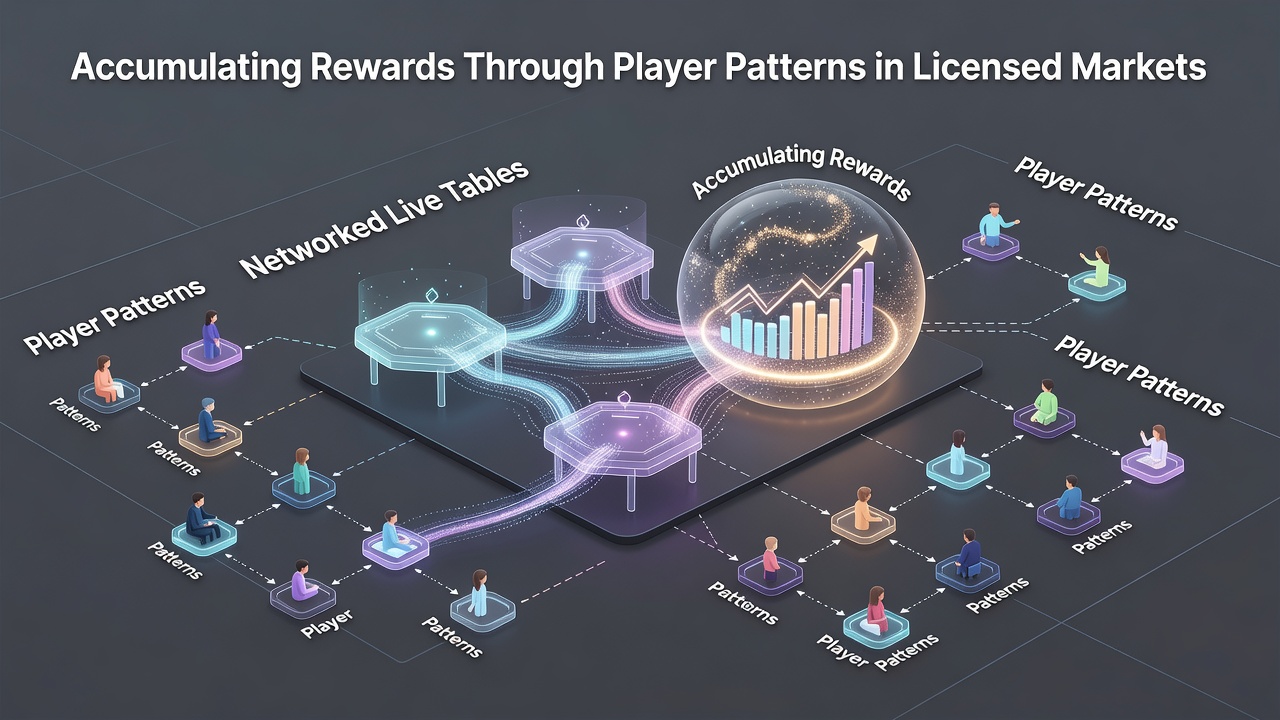
August 2026 figures released by several European gaming associations showed a measurable rise in cross-venue participation on networked live tables, with average session lengths increasing in markets where pattern-based rewards had been active for at least twelve months. Operators report that players who maintain consistent betting rhythms over multiple visits trigger higher reward tiers more frequently than those with irregular patterns, a dynamic captured through timestamped data streams rather than subjective assessment.
Technical Infrastructure Supporting Pattern Tracking
High-speed connections between venues feed encrypted packets containing bet coordinates, stake amounts, and timing intervals into a central database that applies statistical models to identify qualifying sequences. Redundancy protocols ensure that momentary network interruptions do not reset accumulation counters, preserving teh integrity of ongoing reward pools. Licensed operators must maintain separate audit trails for each table, allowing regulators to trace any individual contribution to the broader network total without compromising player privacy requirements.
Case Examples from Operational Deployments
One multi-site operator in a European licensed market recorded over 2.3 million tracked roulette decisions in a single quarter, with reward releases occurring when pattern clusters such as repeated dozen bets exceeded set volumes. Another deployment in an Asian-Pacific jurisdiction linked progressive meters across four properties, resulting in reward events distributed to players whose individual sequences aligned with network-wide activity spikes. These examples illustrate how the same underlying data architecture adapts to different regulatory environments while preserving the core link between observed patterns and accumulating payouts.
Future Developments in Licensed Networked Gaming
Industry reports from research institutions indicate continued investment in machine-learning refinements that refine pattern detection without altering the fundamental requirement for licensed oversight. Updates scheduled for later in 2026 aim to incorporate additional variables such as time-of-day betting preferences into the reward model, provided each change receives prior approval from the relevant gaming authority. Observers note that expansion of these networks remains contingent on maintaining documented compliance with data-protection and fairness standards already in place across participating jurisdictions.
Conclusion
Networked live tables in licensed markets accumulate rewards by processing standardized data from player betting patterns across connected venues, wth regulatory frameworks ensuring transparency and auditability at every stage. The mechanisms rely on verified technical standards, pattern thresholds, and cross-jurisdictional reporting rather than isolated game outcomes, producing a system where collective activity directly shapes reward availability for participants who exhibit qualifying sequences.