Regulatory Adjustments Reshaping Live Table Games on Licensed British Platforms
Written by Quinn Krüger · Aug 25, 2026

Regulatory Adjustments Reshaping Live Table Games on Licensed British Platforms
Regulatory frameworks governing live table offerings on licensed British platforms have undergone several targeted modifications in recent years, with notable developments unfolding through mid-2026 that directly influence how operators structure dealer interactions, game pacing, and technical compliance measures. These adjustments focus on areas such as real-time monitoring protocols, dealer certification standards, and integration requirements for automated oversight tools, all while maintaining the core structure of games like blackjack and roulette in live dealer formats. Data from industry reports indicates that such changes have prompted operators to revise streaming quality thresholds and introduce additional verification layers for player sessions that exceed certain duration limits.
Key Compliance Updates Taking Effect in 2026
Operators began implementing revised technical standards around game session logging in August 2026, which require enhanced timestamp accuracy and cross-referencing with third-party audit systems to ensure uninterrupted data trails during live broadcasts. These standards emerged from broader efforts to align British platforms with evolving international benchmarks on digital integrity, and they apply specifically to tables where human dealers interact with remote players through video feeds. Research from gaming technology firms shows that platforms adopting these measures reported streamlined reporting processes, although initial setup demanded upgrades to existing camera and encoding equipment across multiple studios.
Further adjustments addressed the handling of side bets and progressive features within live environments, mandating clearer disclosure of odds calculations and payout verification methods at the point of play. Such requirements build on earlier directives that sought to standardize how live table interfaces display multiplier mechanics and bonus triggers, reducing ambiguity for participants while preserving the spontaneous nature of dealer-led rounds. Observers note that these updates have encouraged providers to develop modular software layers that allow quick reconfiguration without halting ongoing games.
Effects on Dealer Operations and Platform Infrastructure
Live dealer recruitment and training protocols received fresh scrutiny under the updated rules, with emphasis placed on standardized testing for procedural consistency across different table types. Platforms responded by expanding in-house simulation programs that replicate high-volume scenarios, enabling dealers to practice compliance checkpoints without affecting actual player sessions. Figures from workforce development studies reveal that training completion rates improved after these programs incorporated scenario-based modules focused on regulatory triggers, such as session pauses for verification.
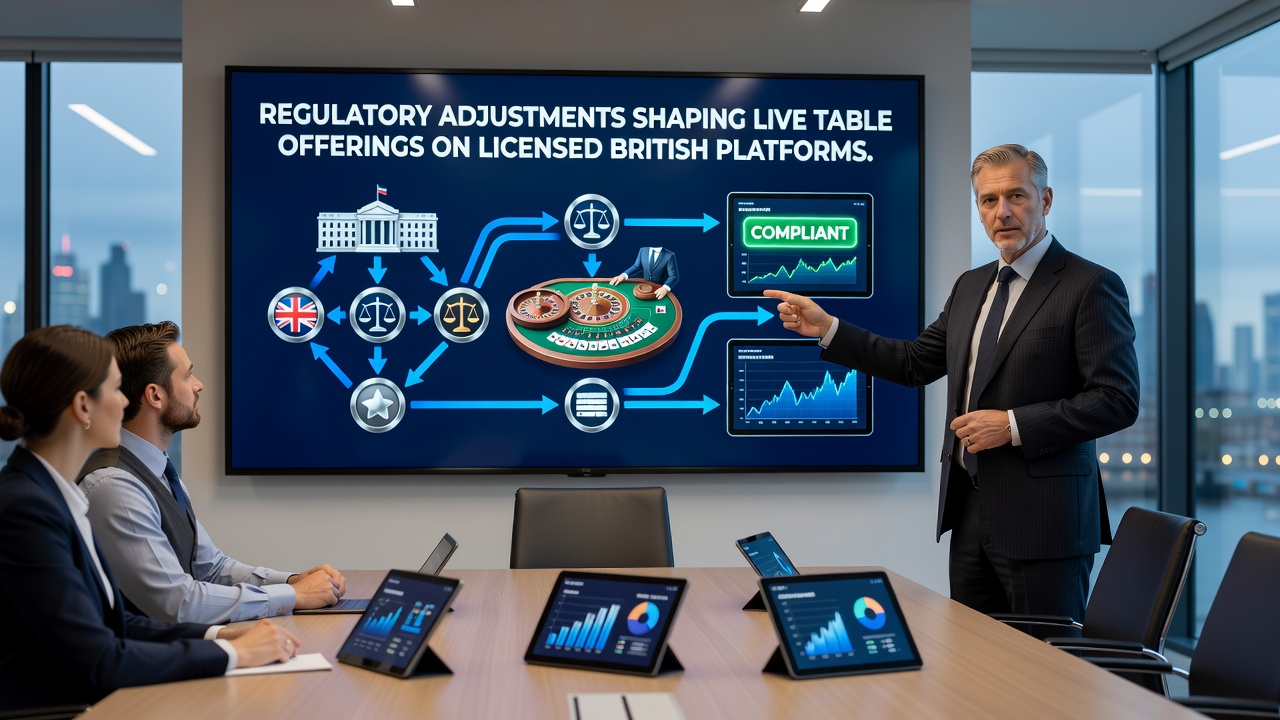
Technical infrastructure also faced revisions, particularly around latency thresholds and failover mechanisms that ensure continuous transmission even during network fluctuations. Providers integrated redundant encoding paths and automated quality checks that flag deviations in real time, a step that aligns with recommendations from groups like the European Gaming and Betting Association on maintaining service reliability. This approach has allowed British platforms to sustain uninterrupted live table availability while meeting new benchmarks for audiovisual fidelity, and it has reduced instances of manual interventions that previously disrupted game flow.
Broader Industry Responses and Data Trends
Market analysis covering the first half of 2026 indicates that live table offerings expanded on several platforms through the addition of hybrid formats that blend traditional dealer elements with enhanced digital overlays for rule clarifications. These formats emerged partly in response to requirements for clearer player guidance during complex betting sequences, and they have been documented in operational summaries submitted to oversight bodies. External data compiled by research institutions such as those affiliated with iGaming Ontario highlights parallel trends in other jurisdictions, where similar emphasis on transparency has led to measurable shifts in session duration patterns without altering overall participation volumes.
Operators have also adjusted promotional structures tied to live tables, incorporating mandatory cooling-off prompts at set intervals that comply with responsible play guidelines. These prompts integrate directly into the dealer interface, allowing seamless continuation once acknowledged, and they reflect coordinated efforts across multiple licensed entities to standardize player safeguards. Reports from technology vendors detail how API integrations facilitated these additions while preserving the core pace of live rounds, demonstrating that regulatory alignment can occur alongside operational continuity.
Conclusion
Overall, the regulatory adjustments implemented through 2026 have driven measurable refinements in how live table offerings operate on licensed British platforms, from enhanced logging procedures to updated dealer training and infrastructure resilience. These changes continue to shape platform capabilities while supporting consistent game delivery across dealer-led formats, and they position the sector to accommodate further refinements as oversight priorities evolve.